

About Department
The Department of Computer Science and Engineering (Data Science) was established in the academic year 2025–26 with the objective of preparing students to meet the growing demands of the data-driven digital era. The department offers a B.Tech program in Computer Science and Engineering (Data Science). The program was introduced with an initial annual intake of 120 students during the academic year 2025–26, and the sanctioned intake was revised to 60 students from the academic year 2026–27.
The department is committed to providing quality education by integrating the fundamentals of Computer Science with emerging technologies such as Data Science, Artificial Intelligence, Machine Learning, Big Data Analytics, Data Visualization, and Cloud Computing. The department is supported by experienced and dedicated faculty members who strive to impart strong theoretical knowledge and practical skills through innovative teaching and learning practices.
The department focuses on developing industry-ready professionals by providing hands-on training through modern laboratories, project-based learning, internships, technical workshops, guest lectures, seminars, and certification programs. Students are encouraged to participate in technical events, hackathons, coding competitions, paper presentations, and research activities organized by reputed institutions and professional bodies.
The Department of CSE (Data Science) aims to nurture competent engineers with strong analytical, problem-solving, and ethical values, enabling them to contribute effectively to industry, research, entrepreneurship, and society in the rapidly evolving field of Data Science.
Vision & Mission
Vision
To be a centre of academic excellence in Computer Science and Data Science by nurturing competent professionals, innovators, and researchers capable of transforming data into intelligent and ethical solutions for the benefit of industry and society.
Mission
- M1: Impart quality education in Computer Science and Data Science through outcome-based learning, modern computing technologies, and industry-oriented practices.
- M2: Develop analytical thinking, problem-solving ability, research aptitude, and technical competence using Data Science, Artificial Intelligence, Machine Learning, and emerging technologies.
- M3: Foster innovation, entrepreneurship, lifelong learning, ethical values, leadership qualities, and social responsibility to address real-world challenges and contribute to sustainable societal development.
PO's, PEO's, PSO's
Programme Outcomes
- PO1. Engineering Knowledge: Apply the knowledge of mathematics, science, engineering fundamentals, and an engineering specialization to the solution of complex engineering problems
- PO2. Problem analysis: Identify, formulate, review research literature, and analyze complex engineering problems reaching substantiated conclusions using first principles of mathematics, natural sciences, and engineering sciences.
- PO3. Design / development of solutions: Design solutions for complex engineering problems and design system components or processes that meet the specified needs with appropriate consideration for the public health and safety, and the cultural, societal, and environmental considerations.
- PO4. Conduct investigations of complex problems: Use research-based knowledge and research methods including design of experiments, analysis and interpretation of data, and synthesis of the information to provide valid conclusions.
- PO5. Modern tool usage: Create, select, and apply appropriate techniques, resources, and modern engineering and IT tools including prediction and modeling to complex engineering activities with an understanding of the limitations.
- PO6. The engineer and society: Apply reasoning informed by the contextual knowledge to assess health, safety, legal and cultural issues and the consequent responsibilities relevant to the engineering practice.
- PO7. Environment and sustainability: Understand the impact of the professional engineering solutions In societal and environmental contexts, and demonstrate the knowledge of and need for sustainable development.
- PO8. Ethics: Apply ethical principles and commit to professional ethics and responsibilities and norms of the engineering practice.
- PO9. Individual and team work: Function effectively as an individual, and as a member or leader in diverse teams, and in multidisciplinary settings.
- PO10. Communication: Communicate effectively on complex engineering activities with the engineering community and with society at large, such as, being able to comprehend and write effective reports and design documentation, make effective presentations, and give and receive clear instructions.
- PO11. Project management and finance: Demonstrate knowledge and understanding of the engineering and management principles and apply these to one's own work, as a member and leader in a team, to manage projects' and in multidisciplinary environments.
- PO12. Life-long learning: Recognize the need for, and have the preparation and ability to engage in independent and life-long learning in the broadest context of technological change.
Programme Educational Objectives
- PEO1. Excel in professional careers by applying knowledge of Computer Science, Data Science, Artificial Intelligence, and emerging technologies to solve real-world problems.
- PEO2. Demonstrate technical competence, analytical thinking, communication skills, teamwork, and proficiency in modern computing tools to develop innovative data-driven solutions.
- PEO3. Pursue lifelong learning, higher education, research, and entrepreneurship while practicing professional ethics, leadership qualities, and social responsibility.
Articulation of PEOs
- PEO1. Graduates will acquire a strong foundation in Computer Science, Data Science, Artificial Intelligence, Machine Learning, Mathematics, Statistics, and emerging technologies to build successful careers and solve real-world computing problems.
- PEO2. Graduates will demonstrate problem-solving ability, critical thinking, effective communication, teamwork, and proficiency in modern computing tools for designing and developing intelligent data-driven applications that address industrial and societal challenges.
- PEO3. Graduates will continuously upgrade their knowledge through lifelong learning, research, professional certifications, higher studies, and entrepreneurial activities while adhering to professional ethics, leadership qualities, and social responsibilities.
Programme Specific Outcomes
A graduate of the Computer Science and Engineering (Data Science) Program will demonstrate:
- PSO1 – Data Analytics and Intelligent Computing: Ability to acquire, process, analyze, visualize, and interpret structured and unstructured data using modern programming languages, statistical techniques, machine learning algorithms, and intelligent computing tools to support data-driven decision making.
- PSO2 – Design and Development of Data-Driven Solutions: Ability to design, develop, deploy, and evaluate scalable software systems and intelligent applications using Data Science, Artificial Intelligence, Big Data Analytics, Cloud Computing, and related technologies to solve real-world engineering and societal problems.
- PSO3 – Innovation, Research and Professional Practice: Ability to apply emerging Data Science technologies, research methodologies, ethical principles, and entrepreneurial skills to develop innovative solutions, adapt to evolving technologies, and contribute effectively to industry, academia, and society.
CO's
Course Outcomes will be published soon.
HOD Profile
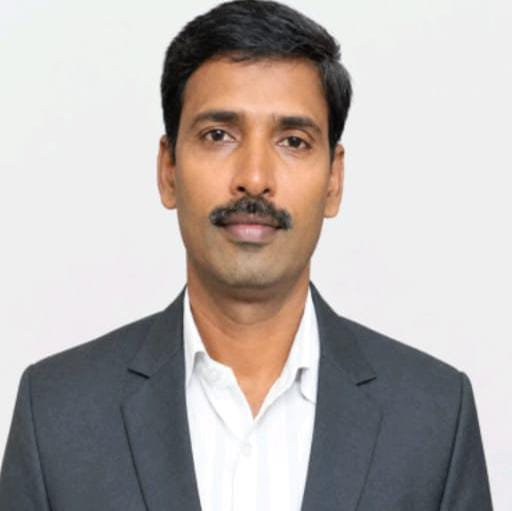
Dr K. Mohana Rao
Associate Professor & H.O.D
20 Years
Handled Subjects
OOAD, UNIX, OS, DAA, Advanced Data Structures, Computer Networks, Introduction to Cyber Security, Cloud Computing, Machine Learning, Deep Learning and Generative AI.
Education
- Ph.D, ANU Guntur, AP, India.
- M.Tech (CSE), Jawaharlal Nehru Technological University, Kakinada, India.
Research / Publications
- Rafi Mohammed*, Basaveswararao Bobba, K Mohana Rao* and Meerasharif Sheik, "Attention-based feature selection with hybrid deep learning models for network intrusion detection", Published 29 May 2026, Engineering Research Express, Volume 8, Number 11. Citation: Rafi Mohammed et al 2026 Eng. Res. Express 8 115203, DOI 10.1088/2631-8695/ae701e.
- V. Amareswar, G. Sai Lakshmi Prasuna, C. Kranthi Rekha, K. Mohana Rao, S. Muqthadar Ali and B. Radha Krishna, "High-Accuracy Appendicitis Diagnosis via Information Gain Regularized Features (IGRF) and Interpretable Machine Learning," 2025 9th International Conference on Inventive Systems and Control (ICISC), Coimbatore, India, 2025, pp. 1379-1386, doi: 10.1109/ICISC65841.2025.11188400.
- K. Mohana Rao, K. Venkata Supraja, "Enhanced Flood Forecasting Model Using CNN" International Journal of Communication Networks and Information Security, ISSN 2073-607x, 2076-0930, 2024, 16(5).
- Mohana Rao Kalavakuri, Bobba Basaveswara Rao, Naga Kavya Dandamudi, Suneetha Bulla "Design of an Improved Model for Cloud Workload Prediction Using LSTM, CNN, and Transformer Networks" Industrial Engineering Journal ISSN: 0970-2555 Volume : 53, Issue 8, August : 2024
- Mohana Rao Kalavakuri, Bobba Basaveswara Rao, Naga Kavya Dandamudi, Suneetha Bulla "Design of an Efficient Model for Cloud Workload Prediction and Resource Allocation" Industrial Engineering Journal ISSN: 0970-2555 Volume : 53, Issue 8, August : 2024
Area of interest
- Algorithms, Cloud Computing, Machine Learning, Deep Learning and Generative AI.
Additional Responsibility
Responsibility within the institute
- Chairman BOS, Department of CSE (DS)
- In charge, Coding Club
- Vice President, IIC
Facilities/Laboratories
Laboratory and facilities details will be updated soon.
Syllabus
Access the syllabus documents below. Click on the link to view or download the PDF.
Events-Workshops/Seminars/Guest Lectures
Records of workshops, seminars, and guest lectures will be added soon.
Events-Certifications
Certification records will be added soon.
Events-Add-On Courses
Add-on course records will be added soon.
Achievements
Department achievements will be added soon.
Toppers
Toppers list will be added soon.
Internships
Internship records will be added soon.
Faculty
| S. No | Name of the Faculty | Designation |
|---|---|---|
| 1 | Dr. K. MOHANA RAO | ASSOCIATE PROFESSOR & HOD |